
Mexico City
Mexico City (colloquially Mexico City), abbreviated as CDMX and previously named FederalDistrict orD.F.・ is one of the 32 federal states of Mexico, as well as the capital of the United Mexican States. It is located in the Valley of Mexico, at an average altitude of 2244 0 m s n. m. It has an area of 1,495 km², and is administratively divided into 16 districts. Its population is about 8.9 million people. However, when the Metropolitan Zone of the Valley of Mexico is also considered, population is now more than 22 million, which places it in ninth place among the largest and most populated urban agglomerations in the world, and thus the largest in the Americas and the Spanish-speaking world.
| Mexico City | ||||
|---|---|---|---|---|
| Capital | ||||
 Architecture of Mexico City. From left to right and from top to bottom: the Angel of Independence, the Metropolitan Cathedral, the financial zone of Paseo de la Reforma, the Latin American Tower, the National Palace, La Mexicana Park, the Castle of Chapultepec, the Monument to the Revolution, the Palace of Fine Arts and a panoramic view of the city. | ||||
| ||||
| Other names: The City of Palaces | ||||
| Slogan: Very Noble and Insigne, Very loyal and Imperial | ||||
 Mexico City Location of Mexico City in North America | ||||
| Location in Mexico City | ||||
| Interactive Map | ||||
| Coordinates | 19°25′10″N 99°08′44″W / 19.4194444444444, -99.1455555555556 Coordinates: 19°25′10″N 99°08′44″W / 19.4194444444444, -99.1455555555556 | |||
| Official language | None (de jure) Spanish (de facto) | |||
| ・ Other languages | Mexican Sign Language Indigenous languages Náhuatl Mixtec of discharge Otomí Southwest Mazatec Isthmus Zapoteco Mazahua or Jñatio Triqui Low and 48 other indigenous languages | |||
| Entity | Capital | |||
| ・ Country |  Mexico Mexico | |||
| Head of Government Representation at the Congress of the Union | Claudia Sheinbaum 3 senators ・ Martí Batres Guadarrama ・ Citlalli Hernández Mora ・ Emilio Álvarez Icazo (see) 24 Members ・ Erika Vanessa of Ibarra Castle (MR.) ・ Armando González Escoto (MR.) ・ Miguel Ángel Jáuregui Montes de Oca (MR.) ・ Gerardo Fernández Noroña (MR.) ・ Claudia López Rayón (MR.) ・ Sergio Mayer (MR.) ・ Beatriz Rojas Martínez (MR.) ・ María de Jesús Rosete Sánchez (MR.) ・ Adriana Espinosa de los Monteros García (MR.) ・ Javier Hidalgo Ponce (MR.) ・ Rocio Barrera Badillo (MR.) ・ Padierna Luna (MR.) Pain ・ Mario Delgado Carrillo (MR.) ・ Alfonso Ramírez Cuéllar (MR.) ・ Luis Alberto Mendoza Acevedo (MR.) ・ Lorena Villavicencio Ayala (MR.) ・ Francisco Javier Saldívar Camacho (MR.) ・ Ana María Rodríguez Ruiz (MR.) ・ Aleida Alavez Ruiz (MR.) ・ Ana Karina Rojo Pimentel (MR.) ・ Flor Ivone Morales Miranda (MR.) ・ Víctor Varela López (MR.) ・ Pablo Gómez (MR.) ・ Guadalupe Ramos Sotelo (MR.) (see) (see) | |||
| Subdivisions | 16 mayors | |||
| Historical Events | ||||
| ・ Foundation | March 13, 1325 (Mexican) August 13, 1521 (Spanish) | |||
| ・ Erection | November 18, 1824 Like: "Federal District" January 29, 2016 Like: Mexico City | |||
| Surface | Position 32nd of 32 | |||
| ・ Total | 1,495 square | |||
| Altitude | ||||
| ・ Average | 2240 m s n. m. | |||
| ・ Maximum | Ajusco, 3930 m. s. n. m. | |||
| Climate | Highland Template Cwb | |||
| Population (2015) | Position 2nd of 32 | |||
| ・ Total | 8,998,653 | |||
| ・ Density | 5,966 room/km² | |||
| ・ Metropolitan | 22,597,699 inhabitants. | |||
| Gentilicio | Mexiqueño, -a Defeño, -a Chilango, -a Capitalino, -a | |||
| GDP (nominal) | ||||
| ・ Total (2017) | USD 445 208 000 | |||
| ・ GDP per capita | USD 26.229 (2017) | |||
| HDI (2019) |  0.885 (1st of 32) - Very High 0.885 (1st of 32) - Very High | |||
| Time zone | Central: UTC-6 | |||
| ・ in summer | UTC-5 | |||
| Postal Code | 01000-16999 | |||
| Lada Key | 55, | |||
| Automotive registration | CDMX / 09 | |||
| ISO 3166-2 | MX-CMX | |||
| Patron(a) | San Hipólito San Felipe de Jesús | |||
| Gini coefficient (2018) | | |||
| Superficial composition | 41 % urban 59% rural | |||
| Population composition | 99.5% urban 0.5% rural | |||
| Official website | ||||
| Member of: UCCI | ||||
It is the largest urban center of the Mexican Republic and also its main political, economic, social, academic, financial, business, tourist, cultural, communications, entertainment and fashion center. It has been the scene of many of the nation's most important historical and media events. Mexico City had a GDP in 2017 of $568,445 million, similar or higher to countries like Peru and Argentina. with average growth in that year of 3.2% (above the national average); these figures represented 17 % of the total national GDP, being the main economy of Mexico, in addition to making a 25 % contribution to the country's economic growth that year. Cataloged as a global city, it is one of the most important financial and cultural centers in the world, with one of the most dynamic economies at the international level, and it is the fifteenth in the world, due to the size of its GDP.
There is no scientific consensus on the date of the city's founding, but it could happen at the beginning of the 14th century. Correlations made in the period of New Spain suggest that the foundation was carried out by the Mexicans on March 13, 1325, on an island on Lake Texcoco, under the name of Cuauhmixtitlan and renamed Mexico-Tenochtitlan by Acamapichtli in 1376 as a homage to the leader Ténoch. That urban nucleus eventually became the capital of the Mexican Empire. On August 13, 1521, the Mexicans were defeated with the seizure of the city by the Spanish and their indigenous allies under the command of the Spanish conquistador Hernán Cortés, an event that marked the beginning of the time of the virreinal.
In 1535, the Viceroyalty of New Spain was officially created, and the new Mexico City was established above the old Mexico-Tenochtitlan, recognized by a royal ballot, of 1545, as Very Noble, Insigne, Very Leal and Imperial Mexico City by Carlos I of Spain. At that time, it was declared the capital of the viceroy, and it has since functioned as the political, financial and administrative center of the territories of the Spanish Empire in North America, Central America, Asia and Oceania. The Spanish dominance of that time over the capital city came to an end when the war of independence ended in 1821, with the entrance of the Trigarante Army into the city. The status of seat of government was ratified in the Independence Act of the Mexican Empire, which named it capital of the Empire.
In 1823, with the proclamation of the First Federal Republic, the First Mexican Empire officially ended (1821-1823), and on November 18, 1824, Congress decided to create a Federal District (i.e. an entity distinct from other states), to house the executive, legislative, and judicial powers in a territory that does not belong that to no particular state, in order to avoid the hegemony of one state over the others of the federation. Thanks to Fray Servando Teresa de Mier and some other people who supported his cause, Mexico City was chosen as the place where the powers of the union were concentrated.
In 1929, municipal liberties in the Federal District were extinguished. progressive changes to the city's status began in 1988 with the formation of a legislative body of popular choice (Assembly of Representatives of the Federal District), they continued in 1997 with the election of an executive (head of Government of the D.F.); Since then, a majority of Mexico City residents have decided to elect center-left/left heads of government for the capital; and concluded in 2016 with the political reform that drafted its own political constitution (it came into full force in 2018); this political process also concluded by granting it in the federal charter the same rights and powers of any state, but which, considering its capital category of the republic, retains the title of federal entity; the names Mexico D.F. and Distrito Federal are also stopped to use only the term Mexico City.
In Mexico City, four of the country's 35 World Heritage sites are nestled: the Historical Center, Xochimilco, the Central Campus of the University City of the National Autonomous University of Mexico, and the House and Study of Luis Barragán. In 1968, it was the first city in Latin America and the Spanish-speaking world to host an Olympic Games.
The city has the second largest number of museums (151) in the world, just below London.
History
Pre-Columbian period

The oldest signs of human occupation in the territory of Mexico City are those of the "Woman of the Rock" and others found in San Bartolo Atepehuacan (Gustavo A. Madero), and it was believed that they corresponded to the Lower Cenolitic Period (9500-7000 BC). However, recent studies place their antiquity at 12 77 00 years, and its origin, by its mitochondrial DNA, as an Asian.
During the first three millennia before our era, under the influence or shadow of the olmeca culture, several important populations like Cuicuilco developed here. Towards the end of the Preclassic, the political hegemony was yielding to the apogee of Teotihuacan, located in the northeast of Lake Texcoco. During the Classic, that city was a hub that concentrated most of the people of the lake basin, leaving Azcapotzalco as one of its satellites on the west bank, occupied by peoples of Otomí descent. In the eastern part of the lake, the Estrella Hill was home to a small town in Teotihuacan.
By the 8th century Teotihuacan's decay began. Some of its inhabitants moved to the shores of Lake Texcoco, where they founded towns such as Culhuacán, Coyoacán and Copilco. The area was the destination of the migrations of the Teochichimecas during the 8th and 13th centuries, which would originate the Tolteca and Mexican cultures. The latter came in the 14th century to settle first on the shores of the lake.
Because of its mythological origin, there is no scientific consensus on the date of the founding of Mexico City-Tenochtitlan but it could happen at the beginning of the 14th century. 16th century sources who correlated old calendars with Westerners put it in 1325 —2 house in the Mexican calendar account—or in 1345, in an islet at the center of the zone put on water. A few years later, a fraction of Mexicans migrating from the north of the country reportedly founded Mexico City-Tlatelolco on another islet in the northwest. Later, in 1428 Tenochtitlan, Tetzcoco, and Tlacopan established the Triple Alliance which was dominated by the Mexicans who created an empire on a territory of about 30 000 square kilometers. As part of this expansion, Tenochtitlan conquered the other Mexican-born city of Tlatelolco in 1473, which, due to their proximity, came together in one urban area. At the time of the Spanish arrival, Mexico-Tenochtitlan was one of the largest cities in the ancient world, based on modern estimates, with an estimated 300,000 people.
Conquest
The Spaniards reached the territory that is currently Mexico City by Iztapalapan in July 1519. They went on their way through the Iztapalapan road to the capital of Tenochca where Hernán Cortés was received by Moctezuma Xocoyotzin on November 8, 1519. (in the absence of Cortés) lashed out at Mexicans in the Matanza de Toxicel. This was the point at which Mexicans started hostilities against European invaders.
During the conquest, Hernán Cortés had Malintzin, better known as La Malinche, as an assistant and translator, who helped him communicate with the Aztecs.
In replacement of Moctezuma who was lynched by his people after being forced by the Spaniards to convince them to cease hostilities, Cuitláhuac was elected tlatoani from Mexico-Tenochtitlan, leading the resistance against the Spanish occupation, defeated the invaders and their indigenous allies on June 30, 1520 in the episode known as "La Noche Triste" ... A disastrous smallpox epidemic also took place at that time, claiming thousands of lives, including that of Cuitláhuac himself. As a replacement for Cuitláhuac he was elected Cuauhtémoc, who faced the siege of Spanish allies with the indigenous peoples of the Puebla-Tlaxcala Valley.
Cuauhtémoc gave up after multiple defeats of the Mexicans and tlatelolcas by the smallpox epidemic and hunger, on August 13, 1521, when he was captured in Tlatelolco.
Virreinal period
In 1521 Cortés decided to establish the capital of New Spain in the former Tenochtitlan, and ordered its reconstruction as it had been destroyed during the war of conquest. Meanwhile it was being rebuilt, it established the Spanish government in the town of Coyoacán, south of Lake Texcoco. From there, he provisionally ruled with the title of Captain General, which Emperor Carlos V ratified. From this population of Coyoacán, the expeditions of conquest of what had been the Mexican empire began, with the purpose of subjecting the indigenous peoples of the various rumbos of what would be the kingdom of New Spain. In 1528, the First High Court of Mexico was established, led by Nuño de Guzmán, and in 1535 the Viceroyalty of New Spain was established, being its first viceroy, Antonio de Mendoza, who continued the territorial expansion of the Spanish conquest.
Villages around the lake (such as Tacuba or Xochimilco) were frequently given out in a 16th-century package, but gradually became dependent only on the king's officers. Mexico City was divided into neighborhoods (which settled on the territorial structures of the Calpultin mexicas). These Indian neighborhoods were originally located on the periphery, although with urban growth and labor migration, the boundaries were increasingly unclear, and Indians came to live in the center of the city. At the same time, a process of cultural assimilation and education of the natural took place in schools located in convents and parishes. There was an intensive Indian education campaign, first led by Franciscans, who in addition to the doctrine taught arts and crafts. The Franciscans also established the Colegio de la Santa Cruz de Tlatelolco for the children of the indigenous nobility, where among other advanced knowledge, students learned Latin. At the end of the 16th century, this school went into decline.
During the viceroyalty, Mexico City was filled with sumptuous constructions, whether for religious worship, like buildings destined for administration, or elite residences, surrounded by humble class neighborhoods. The idea of the two republics—Indians and Spaniards—was overwhelmed by the reality of a mestized population, where the categories of Spanish or Indian did not depend solely on ethnicity. Hence, we cannot talk about the existence of a rich "Spanish city" in front of a poor "Indian city." At the end of the 18th century, in the most central streets of the city:
"Since we do not have censuses of those dates, we can use other documents and thus we see the noticeable trends in the parish records of Sagrario, Santa Veracruz and Santa Catarina, which indicate a clear majority of 56 to 58 % of Indians and castes (and of them the first ones were more numerous) over 44 % and 42 % of Spaniards. And even more expressive is the fact that a century later the proportion was invested to reach 60 percent of Spaniards on the most central streets of the capital. We know that one cannot think of mass immigration from the Iberian peninsula or exuberant fertility of Spanish women. The fact, that the documents support, is that the parish priest paid no attention to ethnic differences and that the flexibility in social consideration allowed to consider as Spaniards those who only had some remote ancestors from the kingdoms of Castile." Pilar Gonzalbo Aizpuru
The vicerinal city was hit by several floods (1555, 1580, 1607, 1629, 1707, 1714, 1806). This led to the decision to dry the lake basin of the Valley of Mexico, through the construction of a drainage channel and a slope, to drain and to release the water through the Tula River.
Independence
After the French occupation in Spain, the City Council of Mexico declared itself sympathetic to the creation of a sovereign board that would govern New Spain during the occupation. The most radical members, such as Francisco Primo de Verdad y Melchor of Talamante, thought that independence should be definitive. The Junta de México had the support of viceroy José de Iturrigaray. However, a reactionary movement jailed members of the city council in 1808 and succeeded in removing the viceroy.
After the start of the independence revolution in Dolores, Guanajuato, the insurgent troops were targeted to capture the capital. Their paths led them to the immediate vicinity of Mexico City. Hidalgo and his army arrived in San Pedro Cuajimalpa shortly after proclaiming independence in Dolores. They defeated the realists in the battle of the Mount of Crosses, yet the insurgents decided to return to the Bajío without taking over the capital.
Since then, the Valley of Mexico has not become a military target for the independentists again, and it has become the royalist army's stronghold. By 1820, when the popular revolution was almost extinct, Mexico City was the site of new movements against the viral government. This time, the conspirators were the same ones who had succeeded in removing Iturrigaray, who after the adoption of the Cádiz Constitution had their privileges threatened. Among them was Agustín de Iturbide, who sealed a pact (Plan de Iguala) with Vicente Guerrero (head of the revolution in southern Mexico) and then forced Juan O'Donojú to sign the Treaties of Córdoba that declare Mexico's independence. The Trigarante Army triumphantly entered Mexico City on September 27, 1821, then Agustín de Iturbide is proclaimed emperor of the First Mexican Empire, by congress, crowning himself in the Cathedral of Mexico.
19th century
After independence, Mexico City was capital of the state of the same name. On November 18, 1824, Congress decided to create a federal district, an entity that would host federal powers. The territory of the Federal District was formed with Mexico City and six other municipalities: Tacuba, Tacubaya, Azcapotzalco and Mixcoac, 20 February 1837.
At this time, there was a period of infighting, two foreign invasions (French and American), and a civil war that ended with the triumph of the liberals and the government of Benito Juárez.
During his regime, the Reform Laws were introduced, which posed an examination of the historical and philosophical bases of Mexican society. They denied both the indigenous past and European Catholicism by promoting the dissolution of religious associations and indigenous communal property; they proposed the separation of the Church and the State; the disamortization of church property and freedom of education (dissolving religious orders that monopolized them).
During the 19th century, the Federal District was the central stage of all political disputes in the country. It was imperial capital twice (1821-1823 and 1864-1867), and of two federalist states and two centralist states that followed countless coups in the space of half a century before the liberals’ triumph after the War of Reform. It was also the target of one of the two French invasions of Mexico (1861-1867), and occupied by US troops for a year in the context of the American War of Intervention (1847-1848).
Towards the end of the 19th century, in the context of the Porfiriato, the Mexican government decided to carry out numerous urban works that, although they had as a center of attention Mexico City, would end up affecting the entire territory of the Federal District. Among them is the construction of the Great Canal de Desagüe, which started in 1878 and ended in 1910. This work almost brought to the brink of extinction lakes that covered much of the capital's territory. Steam boats were introduced for transport through the valley channels, and trams for ground transportation.
In 1910, the Mexican Revolution began winning its first stage Francisco I. Madero and exiling President Porfirio Díaz. During Madero's brief presidential term, the fact known as the "Tragic Decade", which was a 10-day period of fighting that shook the city in February 1913, happens in the city when a group of rebels led by Bernardo Reyes, Felix Díaz and Manuel Mondragón—and part of the mexican army—ousted and murdered President Madero.
20th century
The Mexican Revolution ended Porfirio Díaz's long presidency and marked the beginning of the Mexican 20th century. During the war, the Federal District was successively occupied by Maderists, Zapatistas and Villists and finally the carancists. The latter faction would be replaced by the so-called Sonora Group, which in turn would give rise to the Institutional Revolutionary Party (and its background) that dominated Mexico's government from 1929 to 2000.
Driven by political conflicts with his adversaries and arguing for better control of the administration, then presidential candidate Álvaro Obregón sent on April 18, 1928 to the Permanent Commission of the Congress of the Union a bill to reform Article 73 of the Constitution. In it he proposed to abolish the municipal regime in the Federal District, thus leaving the thirteen municipalities in his territory they disappeared and the government was given the mandate of the president of the republic, who would administer the territory with a central department, and would appoint at his discretion the regent, the attorney, or the attorney general, as well as the intervention in the appointment of future delegates. The reform was approved by a majority, with 185 votes in favor and 21 against of the Mexican Labor Party, led by Vicente Lombardo Toledano. that political institute had at the time much political control of the district municipalities, and one of its prominent figures, Luis N. Morones, sought as Obregón as the president. The new Organic Law of the District and The Federal Territories that were determining these new provisions were published on August 20 in the Official Journal of the Federation and came into force on December 31, 1928, Obregón never saw it implemented as he was killed shortly after winning re-election on July 17.
Later, in 1970, a law was enacted that divided the entity into sixteen political delegations whose inhabitants were unable to elect representatives and local governments until 1997.
With the period of economic boom known as "Mexican miracle" (1950s and 1960s), Mexico City experienced an era of unprecedented urbanization in the country. Its population doubled in less than 20 years, and gradually absorbed nearby villages, overflowing from the territory of the D.F. Many public works were opened during that period. These include the City of Universities, whose construction plans date back to 1929, when two architectural students present as a thesis, a project of Ciudad Universitaria. The area in which they planned their plan was in Huipulco, also south of the City. But it is until 1945, when a law "on the foundation and construction of a university city" is formulated and approved by decree. Another emblematic building is the Azteca Stadium.
Also, starting in 1950, Mexico City was the scene of numerous expressions of dissent against the PRI government. The 1950s saw the railroad protest, which ended with the imprisonment of several of its leaders (such as Demetrio Vallejo).
In 1968, students from numerous public and private schools also started a series of protests that ended with the Tlatelolco massacre, on October 2, by the Mexican Army. Three years later, on June 10, 1971, a demonstration of students from the Higher Normal School were attacked by the government, in what is known as Corpus Thursday. On September 19, 1985, Mexico City was severely damaged by an 8.1-magnitude Richter earthquake. Since then, the capital's civil society has increasingly taken control of those spaces left abandoned by the state. As a result, in the controversial 1988 federal elections, the PRI was widely defeated in the Federal District by the FDN.
In the 1980s, petitions for greater political representation increased, in 1987 a constitutional reform was carried out which created the Assembly of Representatives of the Federal District, which functioned from 1988 to 1994. Since that year another legal reform elevated the status of the Legislative Assembly of the Federal District and its members became legislators.
For 1997, the Federal District elected its head of government for the first time in its history. On that occasion, the PRI lost political control of the city at the hands of the Democratic Revolution Party (PRD) and its candidate, Cuauhtémoc Cárdenas Solorzano. Since then, the party has won the elections for head of government of the Federal District on four consecutive occasions (1997, 2000, 2006, 2012).
21st century
The last elections in the Federal District (2012) resulted in Miguel Ángel Mancera's victory as the elected head of government of the Federal District, belonging to the coalition Progressive Movement of the PRD, PT and Movimiento Ciudadano, for the period from 2012 to 2018, getting more than 63% of the votes, leaving Behind his opponents, atriz Paredes from the Commitment for Mexico coalition made up of the PRI and PVEM, Isabel Miranda de Wallace contending for PAN and Rosario Guerra Díaz by the New Alliance Party; a victory supported by the majority vote given by the chief adviser of the Electoral Institute of the Federal District.
The inauguration of Miguel Ángel Mancera as head of government of the Federal District took place on December 5, 2012, before the plenary of the Legislative Assembly of the Federal District, which ended the term of Marcelo Ebrard's government. At this stage, the capital's government approved a wave of liberal policies, becoming the first federal entity in Mexico to legally recognize same-sex unions. This happened with the passage of the Law on Coexistence Societies in the Capitalist Legislative Assembly. In April 2007, it also became the first federal entity to decriminalize abortion before the 12 weeks of pregnancy, law that was once criticized by the Catholic Church and conservative organizations.
Political Reform in Mexico City
On January 29, 2016, the decree of constitutional reform was promulgated and published, according to which the Federal District ceased to exist and became, from the next day, an entity with full autonomy within the federation under the name of Mexico City; it will continue to retain the capital status of the Republic and will continue to harbor the powers of the union. this change to city-state is similar to the existing territorial organization of the capitals of other countries, such as Germany or Austria.
Some of the most relevant changes to this new designation are:
- Mexico City will be the federal (non-state) entity number 32 and will remain the capital of the country.
- It will have its own Constitution, which will be promulgated no later than January 31, 2017. To do so, it needs a Constituent Assembly that will be voted on the first Sunday of June 2016 and will be installed on September 15, 2016.
- Political delegations are disappearing and territorial boundaries are being established, which will be headed by a mayor and a council consisting of 10 democratically elected councilors.
- The Legislative Assembly will cease to exist to become a local Congress, which may approve or reject constitutional reforms. Previously, the Legislative Assembly was excluded from voting on changes to the Federal Constitution.
- Mexico City will have access to federal funds for states and municipalities, will be responsible for monitoring their administration in the territorial districts. Likewise, it will have full budgetary autonomy and debt autonomy.
- Unlike the states, the federal government will maintain responsibility for financing Mexico City's education and health services.
- The Public Prosecutor's Office of the Federation shall be organized in a Public Prosecutor's Office as a public and autonomous body. Similarly, the High Court of Justice of the Federal District will become the judiciary of Mexico City.
- The Procurator of Justice and the Chief of Police will be appointed by the head of Government and no longer by the president of the republic.
- Mexico City will have a National Statistical and Geographic Information System and its data will be considered official.
- Wages may not be less than the minimum for workers in the other states.
Geography
Hydrography
Originally much of the territory of the current Mexico City was occupied by the lakes system of the Mexico Basin. It was formed more than a million years ago with the emergence of the Chichinauhtzin mountain range, which reprimanded the rivers that were running south and caused the water to accumulate into a large lake; subsequently, the basin was opened by the human being through the construction of the Huehuetoca and Nochistongo slopes in the State of Mexico to divert the Cuautitlán river that caused the floods at that time. The decision to dry the lake system was made during the virreinal season. Although these works were carried out as a result of the flood in 1629, they were unable to prevent Mexico City from flooding repeatedly between the 17th and 18th centuries.
On March 17, 1900, President Porfirio Díaz inaugurated the Valley of Mexico Drainage System, which continues to function and prevents the growth of water bodies in the capital's soil. The last remnants of the water bodies are the canals systems that irrigate the chinampery of Xochimilco and Tláhuac, as well as the wetlands of Tláhuac.
From the construction of the great works that aimed at the drying of the lakes, the basin of Mexico was artificially integrated by both the Great Canal of the Desagüe and the Cuautitlán River, to the basin of the Moctezuma River, which is part of the hydrological region of the Pánuco River. The exploitation of water resources for human and industrial consumption had led to the disappearance of springs in the surrounding areas. In the 19th century, the springs of Chapultepec disappeared. In the 20th century, many of the springs of Xochimilco and Atlapulco were channeled to supply water to the center of the city until they were exhausted. Since the 1980s, the canals of Xochimilco, Mixquic and Tláhuac are fed with treated water from the plant of cerro de la Estrella.
Water from the rivers that still fall to Mexico City is driven to Lake Texcoco or the Great Canal of the Desagüe to be drained to the Gulf of Mexico, through the Tula-Moctezuma-Pánuco system. The only watercourses that survive in the federal state are born in the Sierra de las Cruces or in the Ajusco, and are of little flow. Many of them run among ravines that have been occupied by human settlements, endangering both the inhabitants and the ecosystems associated with the river. Examples of these rivers are: San Joaquín, Tacubaya, San Ángel, Barranca del Muerto, Los Remedios, Río Hondo, Mixcoac, Magdalena, etc. The longest of these rivers is the Magdalena, which runs through the protected area of Los Dínamos, before being tucked into the Churubusco River.
Relief
| Main elevations in Mexico City | |
| Name | msnm |
| Ajusco | 3,930 |
| Tláloc Volcano | 3,690 |
| Pelado Volcano | 3,620 |
| Cuauhtzin | 3,510 |
| Chichinauhtzin | 3,490 |
According to the National Institute of Statistics, Geography and Informatics (INEGI), the territory of Mexico City is located in the geological province of lakes and volcanoes of Anáhuac. The northern border of Mexico City is given by the Sierra de Guadalupe of which Tepeyac Hill is part. Towards the center of the eastern part of the city is located the Sierra de Santa Catarina, a chain of extinct volcanoes whose highest point is the Guadalupe or El Borrego volcano, which rises to 2780 meters. Some descriptions of the capitalist geography usually include the cerro de la Estrella as part of the Sierra de Santa Catarina.
The plains of the Valley of Mexico, where most of the inhabitants of Mexico City are located, are interrupted only by small hills and hills, of which the Rock of the Baños, located near the International Airport of Mexico City, stands out. Further south-east, at the exit to Puebla, stands the Old Rock.
In the west of the city stands the hill of Chapultepec. It is a small mountain that marks the beginning of the serranias that run from west to southeastern Mexico City, and separate the Valley of Mexico from the valleys of Toluca and Morelos. The Sierra de las Cruces is part of that system, and most of the rivers that still flow through Mexico City fall from it.
To the east of the Sierra de las cruces is the Ajusco volcano, which is the highest peak in the Federal District, and gives its name to the serranía that closes the Mexico basin in the south. This mountain range belongs to the Neovolcanic Axis and is also called the Sierra de Ajusco-Chichinauhtzin. Among others, it includes the volcanoes Xitle, Chichinauhtzin, Tláloc, and Teuhtli. The Ajusco mountain range houses several cold-earth valleys in which its inhabitants practice wheat, oats and corn farming. Of these, the most important is the plateau where Parres is located in Tlalpan; and the Milpa Alta valley, which rises from Tecómitl to San Pedro Atocpan, between the skirts of the volcanoes Teuhtli and Tláloc.
Climate and environment
Because of its height above sea level, Mexico City has climates ranging from temperate to humid cold and tundra alpina in the highest parts of the southern highlands.
The urban area has a mild rainy climate, 16.6 °C on average, with maximum temperatures exceeding 28 and even exceeding 30 °C in some days of the end of spring; in some days of winter temperatures are falling to 0 °C in the historic center of the city and to -9.5 °C in peripheral .
The wet season in the city is from May to November, although the rainfall is greater between June and August. The pattern of rainfall indicates that they are more abundant the higher the altitude of a site. Therefore, the low parts near the lake showers of Texcoco are often drier than the peaks of Ajusco. Similarly, altitude conditions temperature and ecosystems in Mexico City. The area comprising the north of Iztapalapa, the territories of Iztacalco and Venustiano Carranza and the east of Gustavo A. Madero is the driest and most temperate region.
Extreme weather events such as hailstones can occur in the city, usually between May and September with an average annual frequency of nine episodes, and small tornadoes, which can occur from time to time. Snowfall was a sporadic occurrence until the 1920s. The period between 1878 and 1895 was characterized by the presence of cold winters, of which only in 1880 did not produce a winter storm. Following the near extinction of Lake Texcoco and the growth of the city and with this the urban heat island, which causes higher temperatures and the phenomenon of snowfall by lake effect is no longer present, the likelihood of a snowfall happening again is virtually nil. The last snowfall in the city occurred in 1967, when the population was 7 million.
- Historical compilation of some important snowfalls in Mexico City in the 19th and 20th centuries
-
- March 15, 1826,
- February 8, 1881
- March 12, 1883,
- March 10, 1891
- March 2-7, 1892,
- January 19, 1906
- February 11, 1907
- January 28, 1920
- March 14, 1940
- January 11, 1967,

The progress of the urban stain has endangered all the ecosystems that existed in the Valley of Mexico. The first to suffer from human predation were lakes. Associated with them were ahuejotes trees, an endemic species of lakes in Mexico. They were also home to many aquatic species, such as axolote or herons, which were persecuted until their disappearance from the Valley of Mexico.
From the mountains all major mammalian species, especially deer and some cannid genera that were hunted to market meat or to defend livestock, disappeared. Smaller species, such as bats, several rodent and poisonous snakes and other harmless ones, are sheltered on the hillside and caves of mountains.
By the 1980s, Mexico City's environmental situation was on the verge of ecological disaster. The growth of industrial activity made the atmosphere of the once "most transparent region of the air" (according to Alexander von Humboldt) one of the most polluted on the planet. The problem of water supply became more evident, as the city does not have its own and sufficient sources of liquid, and the demand of the population and industry exceeded the supply. The current study of water sources for Mexico City thus becomes very important.
Among the first steps taken to alleviate the situation was the introduction of an air quality measurement system (known as IMECA). The results of the measurement indicated that air pollution could lead to serious health problems for the residents of the capital. Therefore, complementary measures were taken to reduce air pollutants, and to ecological recovery in Mexico City. For example, the No Drive Today program was implemented, so that people stopped using their cars once a week (two, on days when there was environmental contingency).
In addition, some unurbanized regions of Mexico City were recovered. In 1986, more than half of the capital was declared an Ecological Reserve Area by President Miguel of Madrid Hurtado. In subsequent years, the same declaration was issued for other areas of D.F. Despite all this, urban pressure is keeping protected areas of Mexico City at risk.
The acceleration of gravity in Mexico City (including the Metropolitan Zone) is 9.78 m/s2.
| Month | Jan. | Feb. | Sea. | Apr. | May. | Jun. | July. | Aug. | Sep. | Oct. | Nov. | Dec. | Annual |
|---|---|---|---|---|---|---|---|---|---|---|---|---|---|
| Temp. max. Aps. (°C) | 28.2 | 29.3 | 31.3 | 32.9 | 34.0 | 33.8 | 30.0 | 28.7 | 28.2 | 29.1 | 28.3 | 27.7 | 34.0 |
| Temp. max. mean (°C) | 21.7 | 23.4 | 25.7 | 26.8 | 27.4 | 25.3 | 23.8 | 24.0 | 23.3 | 22.9 | 22.3 | 21.7 | 24.2 |
| Temp. mean (°C) | 14.6 | 15.9 | 18.1 | 19.6 | 21.0 | 19.4 | 18.2 | 18.3 | 18.0 | 17.1 | 16.3 | 15.0 | 17.5 |
| Temp. min. mean (°C) | 6.4 | 8.3 | 10.4 | 13.3 | 14.2 | 13.5 | 13.0 | 12.7 | 12.7 | 11.2 | 9.7 | 7.1 | 10.7 |
| Temp. min. Aps. (°C) | -7.0 | -5.0 | -5.0 | 0.6 | 4.7 | 7.5 | 8.3 | 7.1 | 5.6 | 1.2 | -5.0 | -4.0 | -4.4 |
| Total precipitation (mm) | 7.6 | 7.0 | 8.9 | 22.5 | 66.5 | 140.0 | 189.5 | 171.2 | 139.8 | 72.4 | 12.6 | 8.2 | 846.1 |
| Days of precipitation (≥ 0.1 mm) | 2.2 | 2.5 | 4.1 | 6.8 | 12.9 | 18.7 | 24.2 | 20.9 | 18.2 | 9.6 | 3.8 | 2.0 | 125.8 |
| Sun Hours | 240 | 234 | 268 | 232 | 225 | 183 | 176 | 176 | 157 | 194 | 232 | 236 | 2,555 |
| Relative humidity (%) | 51 | 47 | 41 | 43 | 51 | 63 | 69 | 69 | 70 | 64 | 57 | 54 | 56 |
| Source: Postgraduate College National Meteorological Service | |||||||||||||
| Geographic maps of the Federal District | |||
| Relief | Hydrology | Climates | |
Forests and parks
Mexico City has several parks and forests, some of which are classified as a protected nature reserve. Some of the main parks and forests located in Mexico City's Metropolitan Zone are:
- Central, North, South, East and Poniente Alameda.
- Chapultepec Forest and Zoo (the largest in Latin America).
- San Juan de Aragón Forest
- Los Coyotes Ecological and Zoo Park
- Venados Park
- Hundido Park
- Ecological Reserve of Xochimilco
- Cerro de la Estrella
- Péñon Hill
- Lincoln Park
- Desierto de los Leones National Park
- Cumbres del Ajusco National Park
- Sierra de Guadalupe Natural Park
- Tezozómoc Park
- El Dinamos Forest
- Pedregal de San Ángel Ecological Reserve
- Mexico Park
- Tláhuac Forest
- Parque España
- Coyoacán nurseries
- Tlalpan Forest
- Bicentennial Park
- La Mexicana Park
Demographics
Population dynamics
| Historical evolution of the population of the Federal District | ||
| Census | Population | Rate 1 |
| 1,980 | 8,831,079 | 2.4% |
| 1,990 | 8,235,744 | -0.7% |
| 2,000 | 8,605,239 | 0.4% |
| 2,005 | 8,720,916 | 0.2% |
| 2,010 | 8,851,080 | 0.3% |
| 2,015 | 8,918,653 | 0.7% |
| Sources: INEGI | ||
| 1 Growth rate is that observed between one census and the previous one. | ||
The territory of the current Mexico City has historically been one of the most populated areas of the country. By the beginning of the independent period, Mexico City's urban stain was more or less restricted to what is now Cuauhtémoc's territorial demarcation. In the early 20th century, when Porfirio Díaz ruled Mexico, the elites of the Federal District began a migration to the south and the west. Soon, towns like Mixcoac, Colonia Del Valle or San Angel were converted into places of recreation or rest by members of the city's upper classes. The tendency of wealthy classes to move their residence to the west of the city was reinforced throughout the 20th century.
In the lands that were won to the lake by the drying of the basin, new housing units called colonies were allowed with the purpose of accommodating members of the middle and lower classes. The first one is the Doctors Colony. She was followed by others such as Obrera and Morelos — destined for the popular class — and Colonia Roma and Colonia Juarez — occupied by the porfirian bourgeoisie.
In the 1950s, the urban area of the Federal District began to overflow from the territory of the central delegations to the vacant lands of the peripheral delegations. Over the next few decades, Mexico City's population doubled at intervals of twenty years or so. Growth is explained by the high concentration of industrial economic activity in the Valley of Mexico. The economic concentration in the Federal District encouraged immigration from the states of the republic, especially from poor states such as Puebla, Hidalgo, Oaxaca and Michoacán.
By the 1980s, the Federal District was the most populous entity in Mexico. After the 1985 earthquake, a large part of the population of the most affected delegations went to reside in the delegations of the southern Federal District. In 1990, the urban stain in the city was larger than in the previous census, with a smaller population. Since then, Mexico City, as a federal entity only, has ceased to be the most populous entity in Mexico.
Metropolitan Area
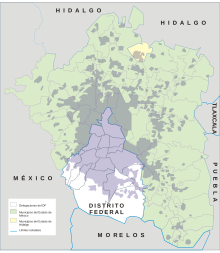
As a result of the demographic growth of the Federal District, in the 1970s the municipalities of Mexico surrounding the Federal District were conurbated to the urban area. Its integration into the metropolitan area is related to its status as industrial zones, a condition that attracted a large part of the migrants who arrived in the Valley of Mexico at that time. In 1990, it was defined that the ZMCM covered the sixteen branches of the Federal District plus thirty-eight municipalities of the State of Mexico. The most recent definition, approved by the local government, the state governments of Mexico and Hidalgo and the federal government, defined the Metropolitan Zone of Mexico City as the urban area formed by the 16 delegations of the Federal District, 40 municipalities built from the State of Mexico and one from the State of Hidalgo.
This definition is positive in the sense that all municipalities are built up or meet the requirements of economic and social integration. The definition of the Metropolitan Zone of the Valley of Mexico, composed of 18 other municipalities of the State of Mexico (total 58), as a normative definition, i.e. composed of some municipalities that have not yet been conurbated, but that given the dynamics of population and geographical growth, will be integrated in the near future.
Ethnic groups
Most of the city's inhabitants are mestizos (people of mixed ancestry: European and indigenous). Despite the fact that in relative numbers the indigenous population accounts for no more than one percent of the total capital population, Mexico City is the largest Amerindian population in Mexico and the Americas, with more than 360,000 indigenous people from almost all ethnic groups in the country. The largest of the ethnic groups living in Mexico City is that of the Nahuas. Other indigenous groups that inhabit it are not native to the region. The largest migrant indigenous communities in Mexico City are the Mixtecos, Otomis, Zapotecos and Mazahuas, although they also include the Tlahuicas, purépecha and Mayan groups. The territorial districts with the highest number of indigenous people are: Milpa Alta, Xochimilco, Tláhuac, Iztapalapa, Cuauhtémoc and Cuajimalpa.
Generations of indigenous people born in Mexico City are often assimilated to the dominant cosmopolitan culture, although in the last two decades, there have been claims movements of indigenous cultures in the capital. Most of the indigenous people living in Mexico City have abandoned the use of their vernacular and the reserve for certain areas of domestic life, except certain areas of the territorial demarcation of Milpa Alta such as Santa Ana Tlacotenco, where it is a usual language parallel to Spanish.
As a result of immigration of international origin, Mexico City also hosts the majority of foreigners living in Mexico. The largest communities are Spanish, American, Argentinian, Colombian, French, Italian, Chinese, Korean, German, Lebanese, Guatemalan, Russian, Greek, Peruvian, Turkish, Cuban, Armenian and Polish, who make up the rest of the capital's population with a lower percentage.
Languages
| Indigenous Languages Spoken in Mexico City | |
| Language | Speakers |
|---|---|
| Náhuatl | |
| Otomí | |
| Mixteco | |
| Zapoteco | |
| Mazahua | 9,631 |
| Source: INEGI | |
As throughout the country, Spanish is the dominant and official language in Mexico City. It is spoken by most of the inhabitants, although it is also considered to be native languages of the capital, Nahuatl and Otomí.
The Nahuatl language is the most widely spoken native language in the country's capital and was spoken mostly in the period before the Spanish conquest. It was lingua franca when the Mexican capital was called Mexico-Tenochtitlán. Currently, only the territorial boundaries of Milpa Alta and Xochimilco are spoken.
The second native language that survived the conquest and the urbanization process was the Otomí. This language is still spoken by some native locals in the territorial demarcation of Cuajimalpa.
The great ethnic diversity in Mexico City leads to a great linguistic diversity from all over the country. The capital of Mexico speaks a great diversity of indigenous languages, among them Mixteco (Mixteco people, Guerrero-Oaxaca-Puebla), Zapoteco (Tehuantepec, Oaxaca, Puebla, Guerrero and Veracruz), the Mazahua language (Mazahua people from the State of Mexico), among others. These indigenous languages and their variants, despite being national languages, arrived in the Federal District due to the migration of indigenous communities to the country's capital. Under the foregoing, we can say that Mexico is one of the countries in the world with the greatest linguistic diversity and cultural exchange, so the city is synonymous with cultural and linguistic exchange. Virtually all indigenous languages of Mexico are spoken in Mexico City.
There are other languages spoken in Mexico City. These languages do not have national-language status, but they are taught and spoken in their communities. English is undoubtedly the most spoken and studied language after Spanish. He is followed by French, German, Italian, Arabic, Chinese, Japanese, Catalan, Basque, Portuguese, Roma, Russian, Yidis, Quechua and Hebrew.
Religions
Most of the people of the capital are believers of the Catholic religion, in 2010 7,299,242 people admitted the faith. Although, for the purpose of the express question of what religion they practice, many often say they are believers, which means that they consider themselves to be adept at Catholicism, but are not regular practitioners. The existing religious associations are 1,177; 760 are Catholics and 417 of other faiths, and there are 25,052 ministers of such worship.
Also in the city is the Basilica of Saint Mary of Guadalupe, a sanctuary of the Catholic Church dedicated to the Virgin Mary in its invocation of Our Lady of Guadalupe. It is located at the foot of Cerro del Tepeyac in Mexico City and belongs to the Primary Archdiocese of Mexico.
La Basilica is the most visited site of the Virgin Mary in the world. Approximately 27 million parishioners visit this shrine every year; of which about 9 million pilgrims come on the festive date to the Virgin of Guadalupe (December 12).
The composition of believers in Mexico City was composed in this way:
| Religion | Population |
|---|---|
| Catholic | 7,400,242 |
| Protestant/ Pentecostal/ Christian/ Evangelical | 660,077 |
| Historical or reformed protester (anabautist, menonite, Nazarene church, Methodist, Presbyterian and others) | 18,062 |
| Biblical Different from Evangelical Religion (Adventists, Mormons, Jehovah's Witnesses | 121,151 |
| None | 599,450 |
| Other | 119,671 |
In parallel with previous cults and religions, less orthodox ones have blossomed in the Mexican capital, reflecting popular traditions not recognized as religion. Among them is the cult of the Holy Death, which has its center in the area of Tepito and La Merced. There are practitioners of santería of Afro-Antillean origin, as well as shamanism, mainly from Oaxaca and Veracruz.
Government and politics
Background
According to articles 44 and 122 of the federal Constitution, and after the political reform of 2016 (which led to the enactment of its own constitution), as the seat of the powers of the Union, Mexico City, has a status different from that of the states of Mexico. It has the same rights and powers as any state, but considering its capital category of the republic, it retains the designation of a federal entity.
The Federal District was created in 1824 with the territory corresponding to a circle whose center was the Zocalo and had a two-league radius. In 1898, the boundaries between the neighboring states and the Federal District were set. Since then, the capital's perimeter has not undergone major changes, except for small changes in the eastern boundary, made not without the displeasure of some communities in the area, which became part of the State of Mexico. Mexico City, by hosting federal powers and the seat of organs of local authority, was recognized a double nature, hence the permanent ambivalence to refer to it, either as Mexico City, Federal District, and even the combination of both with the term Mexico City.
The seat of federal powers in Mexico City was admitted in the constituent of 1857 as a transitional formula; it was a transaction that was reached within that assembly. The second part of Article 44, determines the theoretical possibility of the federal powers being moved to another place, by decree of the Congress of the Union, and would imply that Mexico City become a state. The historical evolution of his political status has been linked to the country's political changes. Thus, between 1927 and 1997 the President of the Republic exercised the administration of the entity through the Department of the Federal District, which was headed by a regent. In 1993, the status of the then Federal District was changed with the adoption of the Statute of the Government of the Federal District, which recognized the right of the residents to elect their representatives to a Assembly of Representatives of the Federal District.
This body operated between 1991 and 1997, when it was replaced by the Legislative Assembly of the Federal District (ALDF). In 1997, when the first legislature of the ALDF came into office, the residents were also able to elect by universal suffrage the head of government of the Federal District who is held every 6 years, on the same date as the election of the President of Mexico. However, under the federation's territorial framework, it still has limited powers and its decisions are subject to the presidential or congressional veto.
The political reform that ended in 2016 had raised the possibility, through amendments to the Magna Carta, of reforming the political status of the then Federal District, whereby the current Government Statute would be replaced by the Constitution of Mexico City in 2018 and the disappearance of political delegations to become Territorial Demarcations, which would be controlled by a government of the same government new federative entity; that it would largely stop using the names Mexico City and Federal District, to use only the term Mexico City; decentralizes the government and expands powers of supervision and consultation to the government authorities of the districts, without reinstating the municipalities, and instead creating mayorships composed of an executive body (mayor) and a collective deliberative body (councilors).
Transfer
The Constitution of the United Mexican States provides that Mexico City is the seat of the powers of the Federation. However, it also provides that their residence may be transferred to any other part of the country, if so provided by the Congress of the Union. In that case, Mexico City would become a state on an equal footing with the other states of the Union and with the new territorial limits that Congress assigns to it.
Since the 1980s, however, small movements have flourished, advocating for the erection of the Federal District in the thirty-two state of the Mexican Union. These movements have been taken over by political parties, especially those on the left. For example, the Socialist People's Party in 1986 presented one of the first proposals to convert the Federal District into the state of Anáhuac.
Form of government
Mexico City, as one of the 32 states of the country, is autonomous in terms of its internal regime, which, according to its local constitution and in sync with the federal constitution, is republican, representative, democratic, secular and popular; It is composed of 16 mayors or districts, the base of their political organization and territorial division. According to its fundamental law, sovereignty and public power are the origin and correspondence of the people, and it is this people who decide to exercise it through a system of separation of powers: Head of Government (Executive), Local Congress (Legislative) and a Judiciary, sitting in various institutions, headed by the High Court of Justice.
As far as the Congress of the Union is concerned, Mexico City is represented on equal terms with any other state. In the Senate it is represented by three senators, two elected by a relative majority and one assigned to the first minority; and in the Chamber of Deputies by the number of districts according to their population size. In 2018, the Federal District elected 24 deputies.
Executive Power
The head of government of Mexico City is the head of the executive power of the entity. It is elected by direct and universal vote. Once elected, he takes office on December 5 of the election year. His office lasts for a period of six years, with no possibility of re-election; not even if he was acting as an interim, interim or substitute. The position is resignable only for serious cause, which must be qualified by the Local Congress. In the event of death, dismissal or resignation, immediately and provisionally assumes office, the Secretary of Government, then, with the reservations provided for by the local constitution, it is up to Congress to appoint a substitute or interim.
The current local Constitution provides for such a position in its fifth, second, chapter, and is addressed by the three subparagraphs, and various points and subparagraphs, which make up article 32. They specify the duties, powers, requirements and restrictions on office; specifications ranging from the command of the City Public Force (local police and seconded national guard); ownership of economic policies, social development and public security; the enactment and enforcement of laws issued by the legislature; to propose appointments to posts that require approval by the Congress or the High Court of Justice; and various prerogatives granted in other articles of the same constitution and local laws.
The Head of Government is the head of the Local Public Service and is assisted by a Cabinet composed of several secretariats, local units, decentralized agencies and directorates-general, who are responsible for various portfolios of public interest, in addition to various advisers attached to the office of the Head of Government.
Legislative Power
The Congress of Mexico City is the depositary organ of the legislative power in this federal entity. Formed as a unicameral assembly, it is composed of 66 deputies, of whom 33 are elected by popular vote and 33 by the principle of proportional representation. Its members are elected by universal vote under the two principles mentioned above; the former directly and the others according to the system of plurinominal lists established by federal law. The term of office is three years with the option of immediate re-election, provided that he is representing the party or coalition that originally nominated the deputy. For each member of parliament, one alternate is elected; he will cover the temporary or final absences of his running mate.
Article 122 of the Federal Constitution provides for this body; while the local magna charter deals with it in the three articles of Chapter II of Title V. This section details the powers, obligations, rights, prerogatives, requirements and restrictions of the legislative body, which are generally framed in those policies in which the entity is autonomous (internal regime, budget, income, social development, public security, procuration and the delivery of justice — which are not covered by the federal order); and which are not exclusively awarded to the Congress of the Union.
Judiciary
The judiciary of the Entity is composed of the High Court of Justice (which has a Constitutional Chamber), a Council of the Judiciary and local courts and specialized courts. Its foundations are found in Title III, Chapter III (covering six sections of Article 35) of the Political Constitution of Mexico City and the Organic Law of the Judiciary of Mexico City. The administration, supervision and discipline of the judiciary, with the exception of the High Court of Justice, is administered by the Council of the Judiciary. In this power and its body as a whole, the power to provide justice in all institutional aspects of the city is vested; the application of legal norms and principles in conflict resolution; and in all areas of the application of the law and the interpretation of the laws in society (civil, criminal, constitutional, commercial, labor, administrative, prosecutorial, etc.), provided that none is considered exclusively for the Federal Judiciary.
Governments of Demarcations
Mexico City is internally divided into 16 territorial boundaries. Each district enjoys autonomy in its ability to elect its own mayor (equivalent to municipalities, but with fewer powers), who is, in most cases, responsible for providing all public services required by its population. The mayor is headed by a mayor, elected every three years. Each district has a collegiate body called the Council, composed of councilors with a relative majority and proportional representation depending on their population size.
The local constitution established in Title III, Chapter VI, the official designation of territorial demarcation for the administrative units in which the city would be divided, so that the figure of delegate was replaced by that of mayor. This chapter describes the powers and responsibilities of mayors, giving them in particular the administration of the most basic public services (public security, drinking water, drainage, lighting, pantheons, markets, parks, minor public works, cleaning services, land use, urban and/or community development, public transport, etc.), the legislative action of councilors to that end, the charging of taxes on those services and any other powers that may be imposed on them grant the local constitution, the organic law on mayors and administrative regulations. The organic law specifies the political structure and organization for each district and its corresponding mayor according to certain provisions
They are also empowered to coordinate their organization with those municipalities in the State of Mexico with which they constitute, according to the categorization of INEGI, the metropolitan area of the Valley of Mexico. Each territorial demarcation is composed of towns, neighborhoods and colonies, all equivalent to the localities that are common populations in the states. Towns and neighborhoods are denominations that correspond to long-standing neighborly units, some of them dating back to the pre-Hispanic era. The colonies were born from the expansion of the urban area of Mexico City in the neighboring lands.
Territorial organization
Mexico City consists of 16 territorial boundaries, which according to Article 52, paragraph 4, of the Political Constitution of Mexico City are as follows:
| Territorial demarcations of Mexico City | |||
| Territorial demarcations | Population (2010) | Area (km²) | |
| Mexico City | 8,851,080 | 1,479.00 | |
| Álvaro Obregón | 727,034 | 96.17 | |
| Azcapotzalco | 414,711 | 33.66 | |
| Benito Juárez | 385,439 | 26.63 | |
| Coyoacán | 620,416 | 54.40 | |
| Cuajimalpa | 186,391 | 74.58 | |
| Cuauhtémoc | 531,831 | 32.40 | |
| Gustavo A. Madero | 1,185,772 | 94.07 | |
| Iztacalco | 384,326 | 23.30 | |
| Iztapalapa | 1,815,786 | 117.00 | |
| La Magdalena Contreras | 239,086 | 74.58 | |
| Miguel Hidalgo | 372,889 | 46.99 | |
| Milpa Alta | 130,582 | 228.41 | |
| Tláhuac | 360,265 | 85.34 | |
| Tlalpan | 650,567 | 340.07 | |
| Venustiano Carranza | 430,978 | 33.40 | |
| Xochimilco | 415,007 | 118.00 | |
| Source: INEGI
| |||
Economics
Mexico City has been, for much of the history of independent Mexico, its main economic center. In the nineteenth century, the peripheral municipalities of the entity had an economy based on agriculture and trade in the goods produced by this activity and other complementary manufactures. Both agricultural and labor products were consumer goods whose main point of trade was Mexico City. The latter, as national capital, specialized in the provision of services associated with public administration. Some of its inhabitants were also agricultural workers, but almost all of them were concentrated in the service sectors and the nascent industry.
During the nineteenth century, the main industrial activities in the Federal District were the textile and paper industries. At the end of that century, mechanical looms were introduced in factories like La Magdalena or La Fama, while paper production was flourishing in Peña Pobre and Loreto. The capital industry was transformed well into the 20th century, when an import substitution model was promoted.
Between the 1950s and 1980s, the Federal District came to produce up to 36% of national nominal GDP. However, since then the Federal District has decreased its specific weight in national GDP. At the beginning of the 21st century, it accounted for only 25% of the total; this is due not to a decline in the productive potential of the D.F. (which remains the country's first economy), but largely to the decentralization of economic development and the growth of several states.
Similarly, Mexico's Federal District employed 45% of Mexico's manufacturing workers in 1980, but a decade later, the share had fallen to 33%. Of the five hundred largest companies in the country, in 1982 it housed 257 of them. Seven years later, only one hundred forty-five remained in the Mexican capital.
The decline in industrial activity in the Federal District involved, on the one hand, growth in relative terms of income from the tertiary (service) sector, and, on the other hand, it was also reflected in the growth of the informal economy in the city. Despite all these setbacks, after the Mexican economic crisis of the 1980s and 1990s, the Federal District was one of the few states whose national GDP share improved. It rose from 21% in 1988 to 23% in 1996. Moreover, per capita income increased, partly due to the demographic contraction resulting from the 1985 earthquake.
In 2004, it produced 20.52 per cent of national gross domestic product (GDP), equivalent to almost $133 billion.
Mexico City earned a GDP in 2011 of $470 billion. In 2012, with 3.5% growth, its GDP amounted to $486.45 billion, which will double in consecutive years. The main contribution to the city economy is finance, business and tourism.
The city had a GDP of $550,819 million in 2016, with average growth in that year of 4.0% (above the national average); these figures accounted for 17% of total national GDP, being Mexico's largest economy, in addition to contributing 32% to the country's economic growth that year. The city's per capita GDP is also the highest in the country, at around $26,229.
Human development
According to the data of the United Nations Development Program (UNDP), Mexico City is the state that has the highest human development index (HDI) in the country, thanks to its excellent administration and the quality of its services. Its coefficient is 0.9225 above 0.8323 averaged by the republic as a whole. The human development index is obtained by analyzing the availability of health services, educational levels and income of a population. In the case of Mexico City, the best indicator was the income index (II), in which it obtained 0.7595 (first position at the national level); in the education index (EI), the score was 0.8498 (first position at national level), while in the health index (IS), it was 0,8880 (second position at national level). In Mexico City, five of the ten territorial subdivisions with the highest HDI are located in Mexico. These were, in 2004, the territorial districts of Benito Juárez, Miguel Hidalgo, Tlalpan, Coyoacán and Cuajimalpa. The following table shows the growth of Mexico City's human development index for the period 2000-2010.
Territorial demarcations of Mexico City by HDI
| Ranking | Territorial demarcations | HDI Index (2010) | Country with similar HDI (2010) |
|---|---|---|---|
| 3 | Benito Juárez | 0.917 |  Germany Germany |
| 2 | Miguel Hidalgo | 0.880 | |
| 3 | Coyoacán | 0.867 |  Greece Greece |
| 4 | Cuauhtémoc | 0.848 | |
| 5 | Azcapotzalco | 0.832 |  Chile Chile |
| 6 | Tlalpan | 0.829 | |
| 7 | Cuajimalpa de Morelos | 0.825 | |
| 8 | Iztacalco | 0.822 |  Bahrain Bahrain |
| 9 | Venustiano Carranza | 0.816 | |
| 10 | La Magdalena Contreras | 0.815 |  Kuwait Kuwait |
| 11 | Xochimilco | 0.814 | Kuwait |
| 12 | Gustavo A. Madero | 0.806 | |
| 13 | Álvaro Obregón | 0.806 |  Montenegro Montenegro |
| 14 | Iztapalapa | 0.783 | |
| 15 | Tláhuac | 0.780 | |
| 16 | Milpa Alta | 0.742 |  Algeria Algeria |
Industry and construction
Mexico City and its metropolitan area have experienced a process of decentralization of industrial processing activity since the late 1980s. This process was stimulated by the federal government due to the dangerous levels of pollution that were achieved in those years, as well as the urban problems arising from the high population concentration that it had in the capital's industrial expansion one of its main incentives. Most of the industry has moved to nearby cities like Toluca, Santiago de Querétaro and Puebla de Zaragoza. The industrial decentralization of the capital has encouraged the growth of this activity in other states, especially those in the north and near the US border, where new maquiladora companies were established since the 1990s, partly driven by NAFTA.
According to data from the City Economic Development Secretariat (Sedeco-DF), the entity has fifty-four industrial zones, and of its total area, 2,578 hectares are intended for industrial use. Capital industrial GDP accounts for 16.32% of Mexico's total industrial output, and reached MXN $50,768,867,000 in 2004. This represents a contraction in absolute and proportional terms compared to the 1999 results, when capital was 18% of the national industrial product, with a value of more than 55 billion Mexican pesos.
In 2003, there were 27,727 economic units which were classified as industrial units employing more than 547,000 capital. The most important demarcation of these units was Iztapalapa, with 5,578 economic industrial units. In 2005, the chemical and oil processing industry, the food industry, the pharmaceutical industry, and the production of electronic equipment, machinery and other metallic items, concentrated much of the labor of the capital industrial branch.
Markets
Securities Market
The Mexican Stock Exchange, S.A.B. de C.V. (BMV) is currently the only stock exchange in Mexico and the most important stock exchange in Hispanoamerica[required quotation]. Its facilities are located on Paseo de la Reforma Avenue, in the center of Mexico City and operate under a concession granted by the Ministry of Finance and Public Credit, in terms of the Law on the Securities Market. The BMV is responsible for providing the technology, systems and rules of self-regulation under which the Mexican stock market operates, mainly with regard to the registration, negotiation and registration of shares, certificates of participation, debt securities and optional securities. As part of its process of demutualization and in line with global trends and changes in the regulatory framework, the BMV launched the Initial Public Offering of the actions representative of its share capital on June 13, 2008, so that these shares can be freely traded on the Mexican stock market thereafter.
It has several indices, including: CPI, INMEX, IMC30, IDIPC, IRT and HABITA of which the CPI or Price and Equity Index is the principal. There are currently 35 shares on the list of 175 listed companies.
Abasto Central
Officially called Central de Abasto de la Ciudad de México or CEDA, it is the main wholesale and retail market of consumer products in the Metropolitan Zone of the Valley of Mexico, specializing in groceries, food, fruit, vegetables, vegetables, birds, meat, fish, seafood and foliage. By flow of money, it is considered the second largest commercial center in Mexico after the Mexican Stock Exchange (BMV)
and the largest in Latin America, is located in the territorial district of Iztapalapa in Mexico City. Moreover, there are numerous markets in Mexico City, almost one in each colony, so there are different dimensions.
Tourism
Tourism in Mexico City is an important economic activity for the capital, first placed nationally in terms of arrivals of national and foreign tourists with 13 million 124 000 visitors, counted only in the hotel sector, in 2015 and is the first tourist destination for foreign visitors within Latin America with 3.5 million arrivals a year that leaves an economic spill 600 dollars per visitor. Based on studies, in relation to arrivals to the international airport, most tourists entering Mexico City come from the United States. The direct jobs generated by the capital's tourism activity in 2015 were 318,000 and 795,000 indirect.
Mexico City in 2014 had 48,217 hotel rooms. From 2013 to 2014, the city received 9,006,292 national tourists and 2,013,481 foreigners.
Culture
Being the capital of a vast pre-Hispanic empire, also of the richest viceroyalty within the Spanish Empire (which ruled a vast territory in the Americas and the West Indies), and finally, the capital of current Mexico, the city has a rich history of artistic and cultural expression.
Plastic arts and architecture
Since the pre-classic Mesoamerican period, the inhabitants of the settlements around Lake Texcoco produced many world-renowned sophisticated art and crafts, some of which are exhibited today at the National Museum of Anthropology and the Museum of the Greater Temple. While many pieces of ceramics and stone engraved have survived, the vast majority of Amerindian iconography was destroyed during the Mexican Conquest.
Much of early colonial art was derived from the codices (Aztec illustrated books), with the aim of recovering and preserving a bit of Aztec iconography and history, and from other Amerindians. Since then, artistic expressions in Mexico were mostly of religious theme. The Metropolitan Cathedral still exhibits works by Juan de Rojas, Juan Correa and an oil painting whose author has been attributed to Murillo. The secular works of art of this period include the equestrian sculpture of Carlos IV of Spain, locally known as "El Horlito". This bronze piece, by Manuel Tolsá, was placed on the square of the same name, in front of the Mining Palace. It also houses the National Art Museum (MUNAL).

During the 19th century, a major art producer was the Academy of San Carlos, founded during the colonial era, later became the National School of Fine Arts, which offers painting, sculpture and graphic design, today one of the art schools of UNAM. Many of the works produced by the students and the faculty of that time are now shown at the National Museum of San Carlos. One of the students, José María Velasco, is considered one of the greatest landscape painters of his time. The regime of Porfirio Díaz sponsored the arts, especially those that had French influence. The popular arts, for example, blossomed in the form of cartoons and illustrations by José Guadalupe Posada and Manuel Manilla. The Museum of San Carlos permanent collection also includes paintings by European teachers such as Rembrandt, Velazquez, Murillo, and Rubens.
After the Mexican Revolution, a cutting-edge artistic movement originated in Mexico City: Muralism. Many of the works of the muralists José Clemente Orozco, David Alfaro Siqueiros, and Diego Rivera are exhibited in numerous buildings in the city, particularly in the National Palace and the Palace of Fine Arts. Frida Kahlo, Rivera's wife, with a strong nationalist expression, was also one of Mexico's most famous painters. His house is currently a museum where many of his works are shown.
The old Dolores Olmedo house has a museum of the same name, located in Xochimilco, in southern Mexico City, and includes several buildings surrounded by extensive gardens. It features a large collection of paintings and drawings by Rivera and Kahlo, as well as xoloizcuintles, a very emblematic dog from the region. It also features small but important temporary exhibitions of classical and modern art, for example, from the Venetian School and modern art in New York.
During the 20th century, many artists emigrated to Mexico City from different regions of Mexico, such as Leopoldo Méndez, a writer from Veracruz, who supported the creation of the Popular Graphic Workshop, designed to find a place of expression for working citizens. Other painters came from abroad, like Catalan painter Remedios Varo, along with other Spanish and Jewish exiles. It was in the second half of the 20th century that artistic production began to deviate from revolutionary themes. José Luis Cuevas opted for contemporary art, in contrast to the muralist movement associated with social policy.
Museums
Mexico City is the most museums in the world, has many museums dedicated to art, including colonial art, modern art and contemporary art. The Tamayo Museum was inaugurated in the mid-1980s to house the collection of contemporary international art, donated by the famous Mexican painter Rufino Tamayo (born in the state of Oaxaca). The collection includes Picasso, Klee, Kandinsky, Warhol, and many others, although most of the collection is stored while the exhibitions they visit are shown. The Museum of Modern Art (MAM) is a repository of 20th-century Mexican artists, including Rivera, Orozco, Siqueiros, Kahlo, Gerzso, Carrington, Izquierdo, Tamayo, and also hosts temporary exhibitions of international modern art. In southern Mexico City, the Carrillo Gil Museum showcases cutting-edge artists, as does the Universitario Arte Contemporary (MUAC) Museum, designed by the famous Mexican architect Teodoro González de León, inaugurated in late 2008.
The Soumaya Museum, named after the wife of Mexican tycoon Carlos Slim, has the largest private collection of original Auguste Rodin sculptures outside Paris. He also has a large collection of sculptures by Dalí, and recently started showing pieces in his collection of teachers, including El Greco, Velazquez, Picasso and Canaletto. The museum inaugurated a new futuristic design installation in 2011, while maintaining a smaller installation in Plaza de Loreto, in the south of the city. The Museum Júmex is dedicated to contemporary art, located on the extensive grounds of Jumex juices company, reportedly has Latin America's largest private contemporary art collection, hosts permanent art collection, as well as traveling exhibitions of prominent contemporary artists. Old San Ildefonso College, in Mexico City's Historical Center, a 17th-century columnist palace, regularly hosts Mexican and international art exhibitions, its recent exhibitions have included those of David LaChapelle, Antony Gormley and Ron Mueck. The National Art Museum (MUNAL) is also housed in a former palace of the Center, which houses a large collection of pieces by the main Mexican artists of the last 400 years and also organizes exhibitions.
Another important place of the city's museums is the Museum of Memory and Tolerance, inaugurated in early 2011. The idea of two young Mexicans became a unique space dedicated to showcasing all the major historical events of discrimination and genocide. Permanent exhibitions include Holocaust and other large-scale atrocities. It also hosts temporary exhibitions; one in Tibet was inaugurated by the Dalai Lama in september 2011.
Performing arts and entertainment
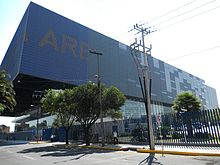
Mexico City is home to several orchestras offering seasonal programs. These include the Mexico City Philharmonic Orchestra, which acts in Sala Ollin Yoliztli; the National Symphony Orchestra, which operates at the Palace of Fine Arts, as well as the Chamber Orchestra of Fine Arts, the National Opera Company (Opera of Fine Arts), the National Dance Company and the Mexican Folklore Ballet of Amalia Hernández; the UNAM Philharmonic Orchestra (OFUNAM), and the Symphony Orchestra of Mining, which present themselves in the Nezahualcóyotl Hall, which was the first enveloping concert hall in the western hemisphere of the world when it was inaugurated in 1976. There are also many smaller enriches the musical scene of the city, including the Carlos Chaleesee Orchestra Perhaps, the Latin American Quartet, the New World Orchestra and the National Polytechnic Symphony.
Among the highlights in the Historical Center, the City Theater, a theater named after Esperanza Iris, this venue became the most important theater in the city; here came the most important figures from both the national and the international level. The Metropolitan Theater is a living building of the former cinema halls; principally dedicated to the performance of plays, concerts, music, recitals, dance performances, among others, at the national and international levels. The Polyforum Cultural Siqueiros, the Theater of the Insurgents, the Cultural Center of the Forest, located behind the National Auditorium, and the Hellenic Cultural Center, as well as the Telcel Theater and the Telmex Cultural Center.
The National Auditorium is the main venue for contemporary shows in Mexico; considered among the best in the world by various specialized means. It's located on Paseo de la Reforma, next to Campo Mars, where you'll find another lesser spectator-capacity place called the Lunario. The city also has arenas for shows, which are designed for events such as concerts, sporting events, circuses, among others. The oldest is Arena México, multi-purpose sand specially used for professional wrestling; the sandy sports palace built for the 1968 Olympic Games and the new Mexico City Arena, the largest and most modern entertainment center in the country. The capital has the Foro Sol, a sports venue designed to hold mass events, such as the Vive Latino and another sports area that is also destined for spectacle events is the Estadio Azteca.
Gastronomy
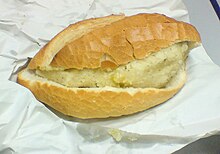
In Mexico City it is possible to find a wide range of food. There are specialty areas where you can enjoy food, such as restaurants and cafés. Elsewhere in the city you can find international and high-cuisine restaurants, representing the culinary traditions of countries as diverse as France, Italy, Portugal, Poland, Spain (including the regional cuisines of Castilla, Asturias, Galicia and the Basque country), Thailand, Japan, Korea, China, Morocco, Lebanon, Peru, Argentina and Brazil. Of course, there are also important establishments dedicated to Mexican cuisine from all regions of the country.
As for local cuisine, the city is a summary of the country's culinary traditions. The ancient gastronomic tradition of the Valley of Mexico has been disappearing, accompanied by a growing difficulty in obtaining ingredients that were native to the lake basin. Today, getting ahuautle—a lake mosquito egg—is virtually impossible, in addition to wild ducks and pumpkin guides, which were basic in Iztapalapa's cuisine. Mixmole — fish mole — which is prepared in Míxquic has had to replace cow languages — a kind of quelite — with beams, and native fish with tents. Nowadays, typical Mexican tojitos such as tlacoyo (from the word tlatlaoyo in náhuatl), which is a thick, oval, and long omelet (usually blue corn) stuffed with beans, haba, or curd are consumed on the streets. There are also the traditional steak, sweaty and al pastor tacos, and cheese-makers with ingredients like pumpkin flower, huitlacoche (black fungus from corn), potatoes with chorizo, mincemeat and many more stews. All of these are always accompanied by various styles of green and red sauce, roasted onions, nopales and beans. Also traditional are "guajolotas", which are tamal cakes, usually of rajas, sauce verde, or mole.
Moreover, the city is home to national gastronomic events, such as the National Fair of the Mole, which takes place during the first three weeks of October in San Pedro Atopan (Milpa Alta).
Houses of culture
According to the Cultural Information System (SIC) of the National Council for Culture and the Arts (Conaculta), there are a total of 226 cultural houses or cultural centers in Mexico City. The following are just a few examples (some belong to the territorial boundaries of Mexico City; others, to the official representations of the states, others more rely on public educational institutions and also those that function through private initiative):
- Casa de Cultura Azcapotzalco
- State House of Culture of Tabasco
- Gaby Brimmer House of Culture
- Casa de Cultura Jesús Reyes Heroles
- Jaime Sabines House of Culture
- Casa de la Cultura México-Japonesa
- House of the Humanities
- Book House
- Cultural Center Alicia Santillana de Guajardo (Quinta Alicia)
- Arnaldo Orfila Cultural Center
- Border Cultural Center
- Casa Talavera Cultural Center, Autonomous University of Mexico City
- Cultural Center of Spain in Mexico
- SHCP Cultural Center
- Cultural Center of the State Government of Chihuahua
- Ex Convento Carmelita Cultural Center of the Lions Desert
- Hellenic Cultural Center
- Ollin Yoliztli Cultural Center
- Police Cultural Center
- University Cultural Center and Cultural University Center
- Centro Cultural Universitario Tlatelolco
- Veracruz Cultural and Social Center
- Los Talleres Cultural Center
- San Angel Cultural Center
- Center of Art and Crafts of Iztacalco
- Image Center
- National Center for Arts of the National Council for Culture and the Arts
- Circo Volador
- Orient Lighthouse
- Indios Verdes Lighthouse
- Italian Institute of Culture
Festivities and other expressions of popular culture
Mexico City hosts important national holidays, ranging from the celebration of Independence Day in the Zócalo to religious festivities, such as the Representation of the Passion of Jesus in Iztapalapa, the Day of the Dead in Míxquic or the pilgrimages to the Basilica of Guadalupe.
All of these events attract hundreds of thousands of people from all over the country and abroad to the capital. Some districts have calendars saturated with popular festivities, such as Milpa Alta whose number reaches seven hundred annual festivities. Alongside the native traditions of the Federal District, immigration has contributed to the integration into the capital's culture of events such as Guelaguetza, promoted by Oaxacan migrants, or the celebration of Chinese New Year. At the end of the 20th century and the beginning of the 21st, globalization has allowed the proliferation in the capital of foreign expressions that have been mixed with pre-existing ones. Thus, for example, it is possible to observe Halloween iconography on the dead shrines; graffiti introduced by the migrants who returned, and who are part of the urban landscape of the Federal District, or the countless rock refractions performed by capital, commercial, and underground groups.
Mexico City has an important and deep-rooted bullfighting tradition and hosts a very large hobby. The big season is celebrated in Plaza México, which, besides being the largest in the world, is considered the most important in Ibero-America. The season starts in autumn and ends in spring.
Mexico City has adopted a new holiday called The Festival of Friendly Cultures; international fair taking place on Paseo de la Reforma Avenue. The fair aims to be a meeting point where visitors learn and know the traditions and customs of different nations throughout the world. The Festival of Friendly Cultures is already the most important celebration of communication and closeness with more than 73 participating countries, in Mexico City. Due to its success, many countries have shown interest in acquiring a space at the fair to expose the richness and cultural diversity of their countries, where they can appreciate a myriad of artisanal relics, music, typical dishes, clothing, art, texts, among others many other objects characteristic of each country.
Mexico City has a great oral tradition, ranging from ancient myths like La Llorona, which would supposedly be related to Mexican Cihuacotl, to the legend, widely shared in the capitalist hospitals of La Iplanchada, about a spectral nurse who miraculously heals the evicted dead she takes care of.
Education and research
Mexico City has multiple public and private educational centers, and is the largest student body. It has kindergartens, primary and secondary schools, which are under the Ministry of Public Education.
Higher Secondary Education
The Metropolitan Area of Mexico City has public and private higher secondary education institutes. In the case of admission to public institutes of higher secondary education, a democratic competition organized by the COMIPEMS (Metropolitan Commission of Public Institutions of Higher Secondary Education) is made up of nine institutions that organize in a unified way the process of selecting students according to the number of successes, the hierarchical list also known as the list of options, which lists the most priority schools for the applicant and so is the demand of the plants. In this context, the National Autonomous University of Mexico designs and classifies its own examination for the applicants who enlisted one of its schools as the first option of their preferences, while maintaining the mechanisms of coordination with the other institutions that make up the Commission, which use the National Examination of Entry to Higher Middle Education (EXANI-I) that is developed and qualified by the National Evaluation Center for Higher Education (CNECEB). ). Due to the high demand of applicants to study upper middle school in 2011, the Federal District Government opened a high school to accommodate 350 of the students who were rejected to enter this level. Similarly, the Ministry of Education of Mexico City offers the Distance High School Program to study through the internet and free of charge upper middle level.
In the first place, there are schools that belong to the two most important universities in the city and the country: in the case of the National Autonomous University of Mexico, there are the National Preparatory School and the College of Sciences and Humanities; in the case of the National Polytechnic Institute, its Centers for Scientific and Technological Studies (each of them also called vocational Cecyt) and the Center for Technological Studies. Second, there are institutions belonging to the Secretariat of Public Education, such as the College of Baccalaurees, the Centers of Technological, Industrial and Service Studies and the National College of Vocational Training, as well as the recent establishment of the Higher Middle Education Institute of the Federal District, which is under the local government.
In terms of support for upper secondary school students, the Federal District Government has created the Prepa Yes program, which grants a monthly scholarship of between 500 and 700 pesos to over 550,000 capital students studying in public institutions in the capital and has reduced school dropout by more than 60%, according to the Secretary of Education the capital in 2011.
Higher education
Within the city, many institutions converge in the various areas of study, among which the National Autonomous University of Mexico (UNAM) stands out, being the oldest and one of the most prestigious in Mexico and Hispanoamerica. Its central campus, known as the University City, was named World Heritage by Unesco in 2007. tana (UAM), is considered one of the best universities in the country and Latin America, due to its high academic performance, as well as one of the most socially cohesive and human development in the world, ranked the highest Mexican university among the best universities in the world in 2019. ・The National Polytechnic Institute (IPN)・includes, among others, many research centers and units, where high-level research is carried out. on scientific and technological disciplines.
Among the institutions of higher education in the capital are the Autonomous University of Mexico City (UACM), the Monterrey Institute of Technology and Higher Studies (ITESM), the Autonomous Technological Institute of Mexico (ITAM), the Pontificia University of Mexico (UPM), the Universidad La Salle (ULSA), the Universidad Anáhuac, the Universidad Iberoamericana, El Colegio o de México (COLMEX), the Free School of Law, the Universidad Panamericana (UP), the Universidad del Valle de México (UVM), and the Escuela Bancy Commerciale; in the artistic and humanistic areas, the National Institute of Fine Arts (INBA), the National School of Anthropology and History and the University of the Claustro of Sor Juana; and in teacher training, Universidad Pedagógica Nacional (UPN) and Escuela Normal Superior de México.
Educational indicators
Mexico City is the state with the highest degree of literacy. Of the more than eight million people living in it who are of school-going age or have completed primary school, 94.83 percent are literate. The national average is 90.69 percent. In terms of the level of schooling, the average is about 11 years of schooling. Mexico City has a high proportion of people who have completed a university or post-graduate education.
Planetariums
- Planetarium Luis Enrique Erro. It belongs to the National Polytechnic Institute, located in the Zacatenco Professional Unit. It is the first planetarium in Mexico open to the public and one of the oldest in Latin America. was endowed with the most advanced celestial vault simulation technology of its time: the Carl Zeiss brand planetary projector, Mark IV model, composed of 29,000 pieces of two thousand different types; with 150 projectors, which together allowed us to observe the actual position of the Sun, the planets, the moon, the stars, the Milky Way and all celestial bodies appreciable at first sight, as they would be observed from anywhere on Earth and at any time of day or night, in a period between 10,000 years BC and 15,000 years D.C.
- Planetarium "José de la Herrán". It is part of the Universum Museum, located in the cultural area of the University City of UNAM. Displays different celestial objects from a digital projection. The visitor can observe in the night sky completely clear, that is, free from air pollution and artificial light. Three themes are offered: the night that the night sky of the day the Planetarium is visited, the nights of the month, is a tour of the night sky according to the month in which the visitor goes to the show, and films with themes related to space sciences.
- MUTEC planetarium. It was inaugurated on May 29, 2009 by then-President Felipe Calderón Hinojosa of Mexico and by the first Mexican astronaut Rodolfo Neri Vela. Shocking scientific projections are offered, as it is equipped with cutting-edge technology to generate a unique visual experience of its kind. It is located in the second section of the Chapultepec Forest.
Libraries
The main public libraries in the city are:
- The National Library of Mexico, the country's biggest bibliographic repository, also known by its acronym BNM, is located in the University City (UNAM) and was founded on November 30, 1867 by then President Benito Juárez. Retain and preserve more 1 250,000 books and documents. The administration and coordination is carried out by the UNAM Institute for Bibliographic Research. Many of the services are available to the general public; they include an open reference room for books and CD-ROMs, as well as specialized rooms such as the mapoteque, the fonoteca, teaching materials, the tyflological, the iconoteca and the video library.
- The Vasconcelos Library, known as the megabilibrary by the Mexican press, is a bibliographic site located in the territorial district of Cuauhtémoc. was inaugurated in 2006 during the administration of President Vicente Fox Quesada. It is the work of architect Alberto Kalach and has been mentioned in the Architectural Record magazine as one of the most representative and modern library buildings in the world. The venue offers free access to library services and various cultural activities. It makes available to users a collection of 580,000 books, and has collections of multimedia, children, Braille and music materials. Inside it is the Mátrix Mobile, the work of the artist Gabriel Orozco.
Transport
Viality
The base of the internal road network are the road axis, which form a rticle in the urban area of the city. This network is complemented by two rings known as the Internal Circuit and Peripheral Ring. The two are considered, along with Calzada de Tlalpan, Ignacio Zaragoza road, Viaducto Miguel Alemán, Achilles Serdán Avenue and Avenida Río San Joaquín, the seven fast lanes of the capital. Also noteworthy are the Paseo de la Reforma, the Lázaro Cárdenas Central Axis and the Avenue of the Insurgents; the latter two cross the city from north to south.
In addition, since August 2010, work has been under way on a comprehensive project in the west of Mexico City, called the Urban Highway, which will connect the highways of Querétaro, Toluca and Cuernavaca, and will be composed of the high roads in the Northern Peripheral and Southern Peripheral, and by the road system of bridges, tunnels and south-west distributors of the city ... In 2007, after the completion of the Metropolitan Troncal Axis works, by building road bridges at the most important crossings of Axis 3 East, a fast track connecting Xochimilco with Ciudad Azteca was established.
Mexico City is connected with the rest of the country through various highways to the cities of Querétaro (211 km), Toluca (65 km), Cuernavaca (85 km), Puebla (127 km), Texcoco (15 km), Tulancingo (100 km) and Pachuca (91 km). Highways are operated through concessions to private individuals since their privatization to private companies. In addition, there are free-circulation federal roads, though of lower quality, linking the capital to the cities bearing the same name as highways, and others such as Cuautla (120 km) and Oaxtepec (80 km).
Electric transport
- Mexico City Metro is a heavy-rail public transport system that serves large areas of Mexico City and part of the State of Mexico. It is the backbone of transport in the capital and has 12 lines (195 stations).
- The Mexico City light rail service is available in the south of the capital. It has a line of 13.04 kilometers. Its vehicular park is made up of articulated light trains with high-floor railroad rolling. It has a total of 18 stations, 16 of which are passing stations and 2 terminals. It's built in a superficial way.
- Mexico City Trolebus Network. It's a trolleybus system, and it's connected to the subway of this city at various stations. The Mexico City Trolebus Network has eight lines, two of which are named Corredor Zero Emissions that serve in various parts of the capital.
- The Suburban Train is a suburban passenger rail system that reduces the three hours a person spends on transporting from Cuautitlán to the station Buenavista to just 25 minutes.
Buses
- The Passenger Transportation Network (RTP) offers urban bus services on 94 routes that link mainly, popular colonies and peripheral housing areas to metro stations.
- The Metrobus is a fast transit bus system (Bus Rapid Transit). It has 7 lines. Each line is assigned a number and a distinctive color. It has a total area of 125 kilometers and has 239 stations.
- The minibus. In Mexico City, there is a large fleet of urban buses, known as peseros or microbuses. They are organized on nearly a hundred routes—groups that serve a restricted area of the capital.
Vehicle transport
- Taxi. Taxis are characterized by their pink color, as well as their Mexico City (Mexico City) logo; moreover, many are sedanes Nissan Tsuru. Automobiles use a meter, with which a time-of-use distance fee plus an initial fee, traditionally known as banderazo (taxis in previous decades used a mechanical flag, which would be lowered and subdued every time a user got up or down, respectively).[citation required] There are also ecological taxis, both ciclotaxis which are bicycles modified with a space for two people serving in the Historical Center of Mexico City, such as Zero Emissions Taxis, hybrid vehicles acquired in 2011.
- Carrot was a new system implemented by the so-called Federal District Government, consisting of the rental of vehicles, whose objective was to improve mobility in the city.
Tourism transport
- Tourist bus or tourist bus is a transport system that is mainly aimed at the visitor, that goes through the most important places of interest in the city. The cost of the ticket includes transportation all day, allowing you to descend and climb at any stop at no extra cost.
Bicycles
- EcoBici is an individual urban bike transport system, a complement to the public transport network. It is an automated system, in which people can access bicycles located on each cycle station through an affiliation system to obtain a card that identifies them as registered users.
Mexico City International Airport
The Benito Juárez International Airport in Mexico City (AICM) is the most traffic-intensive in the Mexican Republic and one of the most bustling in Latin America. has connections to the major Latin American capitals and several cities in the United States, Canada, Europe, Asia and Oceania, including the most sought after destinations in the country.
Bus terminals
For land transport with the rest of the country, Mexico City has four foreign bus terminals: Central Bus Terminal, Central Bus Terminal of the South, Bus Terminal of the East Passenger Bus Terminal (TAPO, the largest in the country) and Central Bus Terminal of the Poniente)
Transit Regulation of the Federal District
As stipulated in the Official Gazette of the Federal District, a new Transit Regulation came into force on Tuesday, December 15, 2015.
Public Services
Supply
The city's electricity supply is provided by the Federal Electricity Commission, after the center's Light and Force agency was extinguished in 2009. The Mexican capital, along with the State of Mexico, is the area of the country with the highest demand for energy of this kind in the whole country. In this same central zone, 25% of the electric energy is wasted.
Drinking water supply and pumping of drainage out of the city are provided by the Mexico City Water System (SACM), which is also one of the main consumers of electric power in the city. The city's sources of supply are mostly of underground type, such as the aquifer of the Valley of Mexico (55 %) and the Lerma System (12 %). The rest comes from surface sources such as the Cutzamala System (30 %) and springs (3 %). Many areas of the city suffer from a shortage of water and lack of access to water, Iztapalapa is one of the most serious territorial districts that is experiencing problems. 20 % of the capital's population does not have access to running water in their homes, obtainable. it is intermittently flush from communal sources or separated from their houses, and an estimated 70 % of the population receives less than 12 hours of continuous water, receiving it by touring, i.e. at certain times of the day. 40 percent of the water coming to the city is wasted due to leaks and illegal piping milking.
The geographical conditions of Mexico City, due to its development in a lake basin and the sinks due to it and the extraction of water from its aquifers, make the city face a serious problem both to satisfy the need for water — it is one of the most water-intensive cities in the world — and to extract the wastewater, particularly in rainy season when floods and water are affected Considerable roads. The city has suffered from floods that have lasted from days to years, such as those recorded in 1604, 1629, 1925 and 1951. As a result, the city's Deep Drainage System was built from 1967.
Security
Public security in Mexico City is provided by the Ministry of Citizen Security of Mexico City, the capital's police. The body had 90,000 elements in 2013, and its performance was organized in 2017 by 5 areas, 15 regions, 72 sectors and 847 quadrants.
In the first quarter of 2017, 23,400 assaults were reported, an average of 560 per day, and a rate of 265 robberies per 100,000 inhabitants. Cuauhtémoc, followed by Benito Juárez and Miguel Hidalgo, is the country's most robberies. In 2017, the rate of intentional homicides was at an all-time high in two decades, at 244 in one quarter. At the national level, the northern and eastern parts of the Mexican capital have the highest levels of national insecurity perception.
Femicides and violence against women
In 2016, the incidence of femicides was 3.2 per 110110000000000000000000000000000000015 years old in the capital, some form of violence took place. In addition to street harassment, one of the places where women in Mexico City live violence is public transportation. Every year, Mexico City Metro receives 300 complaints of sexual harassment.
Media
- Press. It is home to the national newspapers El Universal, Milenio and Excélsior, among others. Among the local newspapers stands La Jornada and Reforma, which, because of their influence and visibility, are sometimes considered as pairs of national newspapers. In addition, there are many publications with a specific focus, including this sports, police, comic, cultural and free press.
- Radio. There are 60 radio stations in amplitude and frequency modulated and short wave. Many of the radio stations in the city have been in operation for many years, and some have given way to programs and historical-cultural events, ranging from collective-cri to radio performance. They now have a variety of choices and services.
- Mobile phone. Nine cellular companies operate with close to 12,800 wave repeaters across the city; These include Telcel, AT&T, Movistar, Iusacell, Nextel, and so on.
- Television. It has thirty digital open TV channels, and a highly competitive market for cable television services (more than 1,700 channels), including Izzi Telecom and Sky, Grupo Televisa, Grupo Multimedia and Dish, MVS Communications, Totalplay Telecomunicaciones de Grupo Salinas, and Axtel TV. Mexican national television stations have their headquarters in this city, among them Televisa (Chapultepec, San Ángel and Santa Fe), TV Azteca (Ajusco) and Imagen Televisión, in addition to the public stations Canal Once, Canal Catorce, Canal 22, TV UNAM and the local channel Capital 21.
- Digital media. Most print newspapers have digital versions of their publications with features like photo galleries, podcasts, and interactive accounts, as well as social media accounts. Other city-based digital press publications include Aristegui Noticias, Animal Político, Sin Embargo and SDPNoticias.
Sports
Some of the most important sports institutions in the country are located in this city. It is the headquarters of the Mexican Olympic Committee, the Higher School of Physical Education and the National School of Sports Coaches. It has several sports units, the largest of which is La Magdalena Mixiuhca, built in what were the communal ejidos of the same name (in Iztacalco). This space is where you will find facilities such as the Autódromo Hermanos Rodríguez, Foro Sol, Palacio de los Deportes, Velódromo Olimpico and Sala de Armas. Other parts of the city include the Olympic Alberca and the Olympic Gym (Benito Juárez), the Olympic Canoeing Track (Xochimilco), as well as three football stadiums: Azteca Stadium, Estadio Azul and the Universitario Olympic Stadium.
Mexico City hosted the 1968 Olympic Games, in which the national sports delegation performed the best performance ever, with nine medals in total. It is the first city in Latin America and the first in the Spanish-speaking world to have hosted the Olympic Games.
In 1970 and 1986 it was also one of the Mexican cities where the two World Cup matches were held, where the two final games were included. Mexico City is the city where the highest number of World Cup matches (23) have been held and, together with Rome, the only cities that have hosted two World Cup finals.
Hosted the Pan American Games in 1955 and 1975; of the Central American and Caribbean Games in 1926, 1954 and 1990; as well as the University of 1979.
| Predecessor: - - | Central American and Caribbean City 1,926 | Successor: Havana Havana |
Predecessor: Guatemala City Guatemala City | Central American and Caribbean City 1,954 | Successor: Caracas Caracas |
Predecessor: Buenos Aires Buenos Aires | Pan American City 1,955 | Successor: Chicago Chicago |
Predecessor: Tokyo Tokyo | Olympic City 1,968 | Successor: Munich |
Predecessor: Cali Cali |  Pan American City 1,975 | Successor: |
Predecessor: Santiago de los Caballeros Santiago de los Caballeros | Central American and Caribbean City 1,990 | Successor: Ponce Ponce |
Professional teams
| Team | Sport | League | Headquarters |
|---|---|---|---|
| Club América | Football | First Division | Estadio Azteca |
| Club Universidad Nacional | Football | First Division | Universitario Olympic Stadium |
| Blue Cross | Football | First Division | Estadio Azteca |
| Club América Femenil | Football | First Division | Estadio Azteca |
| Club Universidad Nacional Femenil | Football | First Division | Universitario Olympic Stadium |
| Mexican Red Devils | Baseball | Mexican Baseball League | Alfredo Harp Helú Stadium |
| Condors LFA | American Football | Professional American Football League | Stadium Black Storm |
| Mexican LFA | American Football | Professional American Football League | Perros Negros Stadium |
| Mayas LFA | American Football | Professional American Football League | Wilfrido Massieu Stadium |
| Capitans of Mexico City | Basketball | National Professional Basketball League | Juan de la Barrera Olympic Gym |
| CU Pumas | American Football | ONEFA | Universitario Olympic Stadium |
| White Eagles | American Football | ONEFA | Wilfrido Massieu Stadium |
| Burros Blancos Zacatenco | American Football | ONEFA | Wilfrido Massieu Stadium |
| Atlante F.C. | Football | Expansion League | Sports City Stadium |
| FC Cañoneros Marina | Football | Premier League-Series A | Momoxco Stadium |
| FC Polytechnic | Football | TDP League | Territorial Guinda Stadium |
| Cuextlán Academy | Football | TDP League | Valentín González Stadium |
| Silver Soccer Bodies | Football | TDP League | Deportivo San Isidro |
| Álamos | Football | TDP League | Magdalena Mixhuca |
| Chilangos F.C. | Football | TDP League | Deportivo Benito Juárez |
| Yalmakan B | Football | TDP League | Deportivo Lázaro Cárdenas |
| R-Reyes FC | Football | TDP League | Sporty Six-Year Plan |
| Oceania | Football | TDP League | Sport Oceania |
| Novillos Neza | Football | TDP League | Eduardo Molina |
| AMF Aztecs | Football | TDP League | Deportivo Francisco Zarco |
| Atlético San Juan de Aragón | Football | TDP League | Deportivo Francisco Zarco |
| Muxes Sports Club | Football | TDP League | Sports Plutarco Elias Calles |
| Club Carsaf | Football | TDP League | Deportivo Francisco Zarco |
| FC Cañoneros Marina "B" | Football | TDP League | Momoxco Stadium |
| Halcones Zuñiga | Football | TDP League | Eduardo Molina |
| DD Warriors | Football | TDP League | Deportivo San Isidro |
| Atlético Capitalino | Football | Liga de Balompié Mexicano | Jesús Martínez "Palillo" Stadium |
Football
- Note: the variant "football" is used in the pronunciation and spelling of mexican spanish.
According to the Hemerographic Record of The Two Republics newspaper on January 1, 1881, on December 30, 1880 the Al Fresco Club was founded in Mexico City and one of the sports proposed among others is "football" although finally the idea did not prosper. This is the first mention in the newspapers of the time of the term "football" in Mexico. In the years that followed, various athletic associations of the city's wealthy class tried unsuccessfully to found football teams, but only sporadic, non-continuity, friendly meetings were held in the organization of any group or competition. In these attempts, the first football match played in the city with motives for the celebrations of the opening of the works of the Great Sewerage Channel on 9 October 1892 between two representatives of social and sports clubs stands out.
The Athletic Club Reform, founded as a social and sports club in 1894, organized the first football club in the history of the city in 1901, and it would be this one who will manage the creation of the first tournament organized in the country: the Mexican Football League Amateur Association on July 19, 1902. The first game was played on October 19, 2012, at a baseball field in the area surrounding Paseo de la Reforma; Mexico Cricket Club defeated British Club 5-1.
Mexico City is home to three First Division teams: Club América, the Club Universidad Nacional and Cruz Azul (the latter founded in Hidalgo, in 1927, and whose headquarters moved in 1971 to the capital). The rivalry between America and National University is known as Capitalist Classic, while the Young Classic faces America with Blue Cross. It is also home to a Premier League A-SERY club and 16 of the Third Division of professional football.
Necaxa (1923-2003) and Atlante (1918-89, 1990-02 and 2004-07) were also traditional teams from Mexico City, but moved respectively to Aguascalientes in 2003 and to Cancun in 20 207. In addition to the clubs, the city has also hosted: British Club (1901-1912), Mexico Cricket Club (1901-1908), Athletic Club Reform (1901-1924), Mexico Football Club (1910-1935), Spain (1912-1 950), Asturias (1918-1950), Aurrerá Football Club (1919-1932), Mars (1928-1953), Leones (1932-1933) and Spanish Athletic (1971-1982)
Baseball
- Note: in the pronunciation and spelling of mexican spanish, the variant "baseball" is used.
In the city, the Diablos Rojos del México (Red Devils of Mexico), a professional team of the Liga Mexicana de Béisbol and the most successful franchise of that circuit, plays as a place with 16 championships. Between 1955 and 2001, it also hosted the so-called Capitalist Tigers, who won eight championships in the Mexican capital while they played there. In addition to these, the Azules de Veracruz, the Tigers of Comintra, the Agrario of Mexico, the Gendarmerie of Mexico, the DF Police, the Adams Chiclets of Mexico, the Lions of Public Works, the Mexican Traffic and the Mount of Piedad de México also played in this city.
The Foro Sol, the city's multi-purpose venue, hosted group B duels, in the first round of the World Baseball Classic 2009.
Basketball
In 2015, he organized the 2015 FIBA Americas Championship, based in the Palacio de los Deportes (sports arena), in which Venezuela won the tournament and, together with Argentina, qualified for the Rio 2016 Olympic Games, with Mexico finishing fourth. In this event, FIBA recorded the highest turnout record, with 20,020 viewers.
Today, Mexico City has a professional basketball team, Capitans of Mexico City.
Automotive
The Autódromo Hermanos Rodríguez has hosted the Mexico Grand Prix, a race valid for the Formula 1 automobile world championship, which was held for the first time as an invalid event for the title in 1962, and then was included between 1963-1970, between 1986-1992 and after 2015. The automobile has also hosted the NASCAR Busch Series, NASCAR Mexico Series, Champ Car, Formula E and the FIA World Resistance Championship.
Pole
In April 2008, the World Polo Championship, which is the highest pole-level appointment at the national team level, was contested in the Mars Field of this city.
American Football
- Note: the variant "football" is used in the pronunciation and spelling of mexican spanish.
As for American football, the city is home to UNAM’s legendary UC league league clubs, IPN White Eagles, and IPN White Donkeys, which compete at the ONEFA Center Conference. The city also has three teams in the Professional American Football League of Mexico: Mayas, Mexicas and Condors.
In October 2005, Mexico City became the first city to host a regular season NFL game outside the United States, a game played at Azteca Stadium. The 103,467 spectators who attended this match is the highest number in the whole history of the NFL for a regular season game.
On February 5, 2016, the NFL, after a few months of management by Mexico City sports authorities, Mexico's league branch, and the group that runs the stadium Azteca, announced that it would once again have a regular-season game. The Oakland Raiders and the Houston Texans clashed on Monday, November 21, 2016, with the Raiders scoring 27-20 winning; this was the first edition of the Monday Night Football event played outside the United States.
International relations
Cities with: |
|---|
Hermances
The city is part of the Union of Ibero-American Capital Cities and, in addition, Mexico City currently has 24 Conventions of Sibling and Friendship with cities in America, Europe and Asia, of which 15 are capitals
|
|
|


Specific cooperation agreements
Specific cooperation agreements have been signed with 23 cities in North America, Asia, Latin America and Europe:
|
|
|


Other Similarities
It also belongs to the Union of Ibero-American Capital Cities (UCCI), an association that brings together 29 other cities in Ibero-America.
|
|
|


Predecessor: La Paz La Paz | Ibero-American Capital of Culture 2,010 | Successor: San Salvador San Salvador |
Predecessor: Tegucigalpa Tegucigalpa |  Ibero-American Capital of Culture 2,021 | Successor: Brasilia Brasilia |
See also
Portal: Mexico City. Content related to Mexico City.
- Legislative Assembly of Mexico City
- Municipality of Mexico
- Wealthiest cities in the world
- Territorial demarcations of Mexico City
- Coat of arms of Mexico City
- Territorial evolution of Mexico City
- List of rulers of Mexico City
- Government of Mexico City
- Annex: Chronology of Mexico City
- History of Science and Technology in Mexico
- History of Mexico City
- Head of Government of Mexico City
- Indigenous peoples of Mexico City
Bibliography
- Acosta Ochoa, Guillermo (2007): "Preceramic occupations of the Mexico Basin. From Population to First Agricultural Companies", in Arqueoweb No. 8 (2), consulted on 22 March 2007.
- Álvarez Arredondo, Ricardo A (2002): History of the forms of government of Mexico City. Parliamentary Group of the Party of Democratic Revolution: House of Representatives, LVIII Legislature: Congress of the Union. Mexico, D.F.
- Bernal, Rafael (1994): Mixing and Creole in the literature of the 16th century New Spain. Bank of Mexico.
- Garibay K., Ángel María (1992) [1950]: Indigenous poetry from the Altiplanicity. National Autonomous University of Mexico.
- Garza, Gustavo (2000): Mexico City at the end of the second millennium. The College of Mexico, Center for Demographic and Urban Development Studies. ISBN 968-12-0996-6, 9789681209964
- National Institute of Geography, Statistics and Informatics (2006): Federal District. Statistical Yearbook. INEGI, Aguascalientes. ISBN 0188-8544
- Lombardo de Ruíz , Sonia / Guadalupe de la Torre Villalpando / María Gayón Córdoba / María Dolores Morales Martínez (2009): Land and demarcation in population censuses. Mexico City 1753, 1790, 1848 and 1882. Mexico, Adabi de México / Fundación Alfredo Harp Helú ISBN 978-968-03-0373-1[1]
- Mathieu, Dominique (2004): "What did democratization mean in urban management?" In: Rodríguez Kuri, Ariel and Sergio Tamayo Flores Alatorre (Co.): The first hundred years. Next hundred.... Metropolitan Autonomous University. pp. 173-188.
- United Nations Organization (United Nations, 2003): World urbanization prospects. The 2003 revision, on the UN website, consulted on March 22, 2007.
- Game Bush, Virgilio; Anzaldo Gómes, Carlos (1998). Demographic and urban scenarios of the metropolitan area of Mexico City. Conapo. ISBN 970-628-300-5. Archived from original on February 16, 2010. Consulted May 14, 2010.
- Paz, Octavio (2003): The labyrinth of solitude, Cátedra, Barcelona.
- Terraces, Oscar (2004): "Metropolitan Centrality in Mexico City." In: Rodríguez Kuri, Ariel and Sergio Tamayo Flores Alatorre (Co.): op. cit. pp. 235-266.
- Villalobos Jaramillo, Javier (2010) The 100 Most Important Sites and Monuments of the Historical Center of Mexico City, Mexico, Adabi of Mexico / Fundación Alfredo Harp Helú
- Ward, Peter M (2004): "Government and democracy in the Federal District: Cardenas, the PRD and the egg of the parish priest." In: Rodríguez Kuri, Ariel and Sergio Tamayo Flores Alatorre (Co.): op. cit. pp. 189-234.
- Zolov, Eric (2004): "Notes on Capital in its Hegemonic Contribution". In: Rodríguez Kuri, Ariel and Sergio Tamayo Flores Alatorre (Co.): op. cit. pp. 111-126.
